Head of Design
Goodbye, red eyes. Hello, faster imaging.
Designed a new PACS and DICOM viewer, building the foundation for a product used to interpret 70K+ studies within four months of launch.

A (young) man had a dream.
Eden started with a different ambition: a device designed to help detect breast cancer, an idea Julian Ríos Cantú began working on at 16. As the team explored bringing it to the real world, the barriers became clear: regulatory requirements, clinical validation, manufacturing, adoption.
Instead of forcing the technology to fit the problem, we went back to first principles.
What was actually preventing healthcare professionals from doing their best work? That question led somewhere else.
The biggest problem was hiding in the workflow.
Radiologists and technicians already had tools for medical imaging. The friction came from everything surrounding them.
A typical study could mean interpreting images in PACS, switching to Word to write the report, and depending on local hardware, software, and power to keep everything running. The work stretched across disconnected tools, making even routine tasks harder than they needed to be.
We saw an opportunity to rethink the workflow around the image.

PACS was the foundation, not the destination.
We started with the most critical part of the workflow: how radiologists viewed and interpreted studies. But the vision was bigger than another PACS.
The product needed a foundation that could eventually support reporting, storage, automation, and other tools around medical imaging.
The PACS was the foundation. The system was the product.

Familiar enough to learn, but different enough to matter.
Radiologists already had established ways of working. Replacing those patterns wholesale would create a steep learning curve and slow adoption.
We designed Eva PACS around familiar interaction patterns while rethinking the parts of the workflow that created unnecessary friction.
The goal was to make something familiar enough to learn quickly, but different enough to change expectations.

Interpretation and reporting became one workflow.
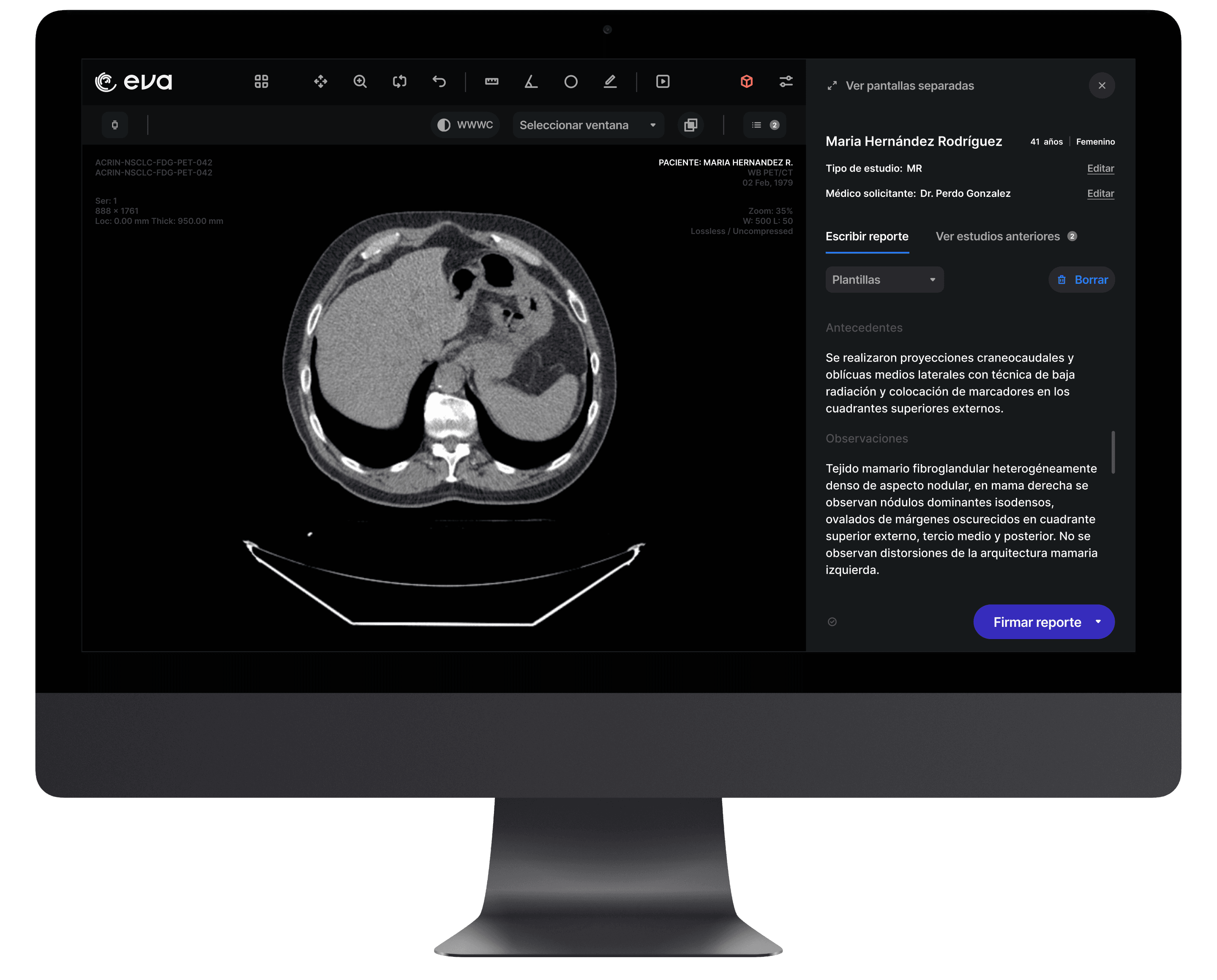
One of the most important UX decisions was bringing reporting directly into the viewer: a split workspace where the study stayed visible while a sidebar captured observations, simultaneously.
No switching applications. No leaving the study to open Word. No relying on memory to write everything afterward.
We didn't just bring reporting into the viewer. We made it part of the interpretation workflow.
DICOM Viewer in it’s default behavior.
Interpretation panel open.
The cloud introduced a new kind of uncertainty.
Moving from local tools to a cloud-based workflow changed more than where studies were stored. Radiologists were used to knowing where their data lived and what they depended on to access it.
Now, studies and reports had to remain available without relying on local hardware, software, or power.
Reliability became something we had to design for.

We built the foundation early.
The Design System was part of the product from the beginning. I worked closely with a frontend engineer to establish a shared visual and technical language that could support the product as it evolved.
Dark mode was considered from the start, reflecting the long periods radiologists spent working with medical images.
Every new screen had a system to build from.


We tested the workflow before scaling it.
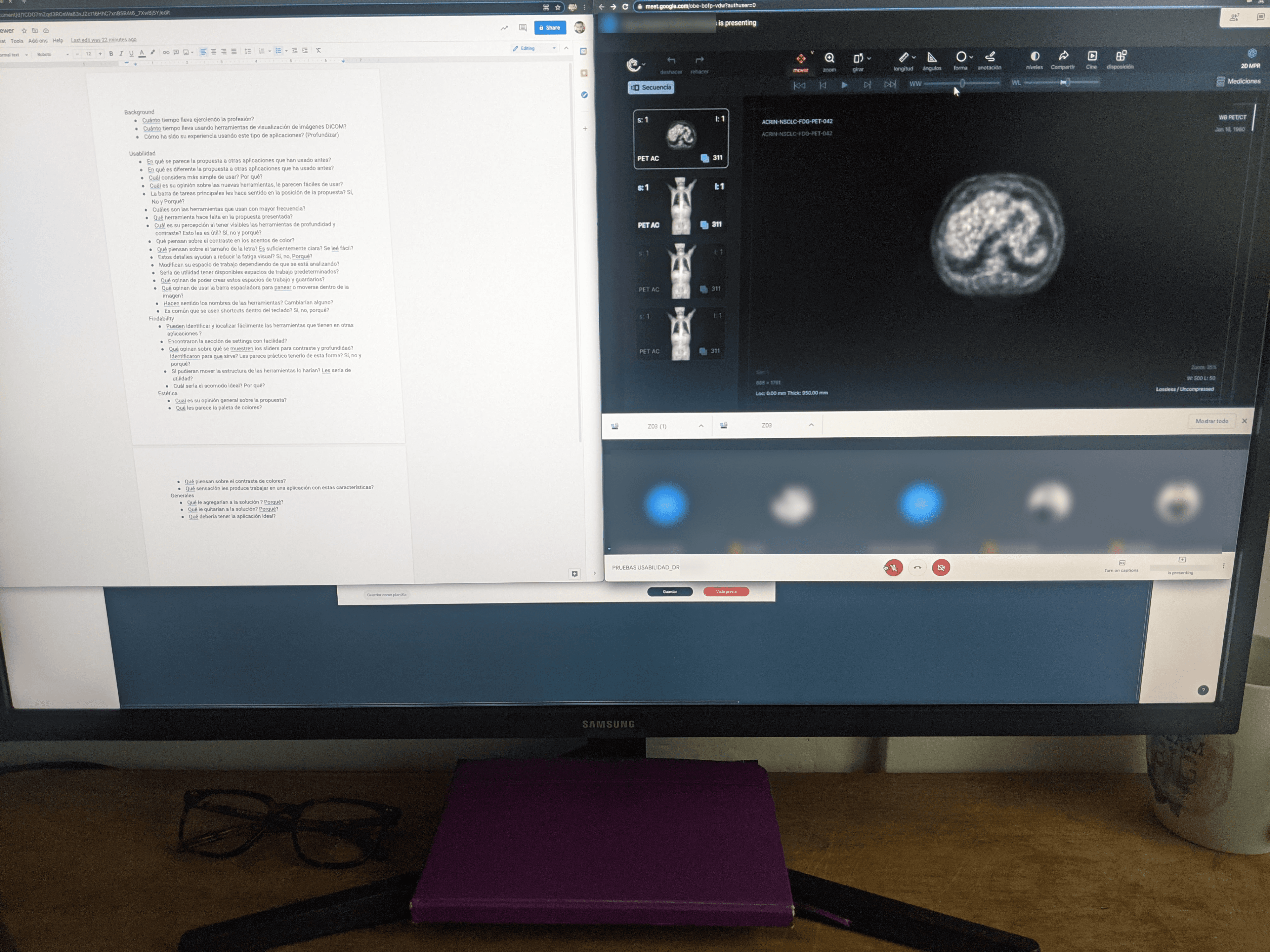
We brought early concepts back to radiologists through interviews, task-based sessions, and visits to real clinical environments. Their feedback shaped what made it into V1 and what stayed out.
Some capabilities remained intentionally manual, while others, like dictation and 3D imaging, were deferred.
V1 was about proving a better way to work.
The product found traction fast.
Revenue in the first four months alone matched what had originally been projected for the full first year.
10K+
Active users during the first 4 months post-launch.
70K
Radiological studies interpreted.
$500K USD
Average revenue in the first four months.
What I learned.
Solve the right problem before adding complexity.
Going back to first principles helped us focus on the workflow that mattered most. That focus shaped what we built, what we left out of V1, and where we invested next.